Conquering Piegan Pass Trail: Your Ultimate Guide to Glaciers, Wildlife & Unforgettable Mountain Vistas in Glacier National Park
Prepare for an unforgettable adventure into the heart of Glacier National Park, where some of the most spectacular mountain vistas and glacial landscapes await. The hike to
Piegan Pass in Glacier National Park offers a challenging yet immensely rewarding journey, taking you deep into a realm of rugged peaks, pristine forests, and the dramatic beauty of the Continental Divide. This strenuous trail is renowned for its unparalleled panoramic views, offering glimpses of magnificent glaciers and a high probability of encountering iconic Rocky Mountain wildlife. If you're seeking a quintessential Glacier National Park experience that pushes your limits and fills your senses, the Piegan Pass Trail is a must-do.
Trail Overview and Essential Statistics for Piegan Pass
The Piegan Pass Trail is a robust endeavor, demanding a good level of fitness but promising a payoff that justifies every step. It's often lauded as one of the best hikes in Glacier National Park, particularly for those seeking a grand, high-elevation experience.
Here are the vital statistics for the primary route:
- Trailhead Location: Siyeh Bend Trailhead, situated approximately 2.2 miles east of Logan Pass on the famed Going-to-the-Sun Road. This is the preferred starting point due to its more gradual ascent. An alternative, though longer and more strenuous, route begins from the Jackson Glacier Overlook.
- Roundtrip Length: A substantial 9.2 miles.
- Total Elevation Gain: An impressive 1850 feet, making for a consistent climb.
- Average Elevation Gain per Mile: Approximately 402 feet, indicating a steady uphill trek.
- Highest Elevation: You'll reach 7600 feet at the pass itself, placing you firmly in alpine territory.
- Trail Difficulty Rating: Rated at 12.90, classifying it as a strenuous hike. Proper preparation and stamina are key.
The journey begins at the easily accessible Siyeh Bend, offering stunning initial views and setting the stage for the dramatic scenery to come. Choosing this trailhead over the Jackson Glacier Overlook provides a more forgiving climb, allowing you to conserve energy for the upper reaches of the pass.
Your Journey on the Piegan Pass Trail: A Path of Discovery
The hike to
Piegan Pass in Glacier National Park is a narrative of evolving landscapes, transitioning from verdant forests to exposed alpine scree.
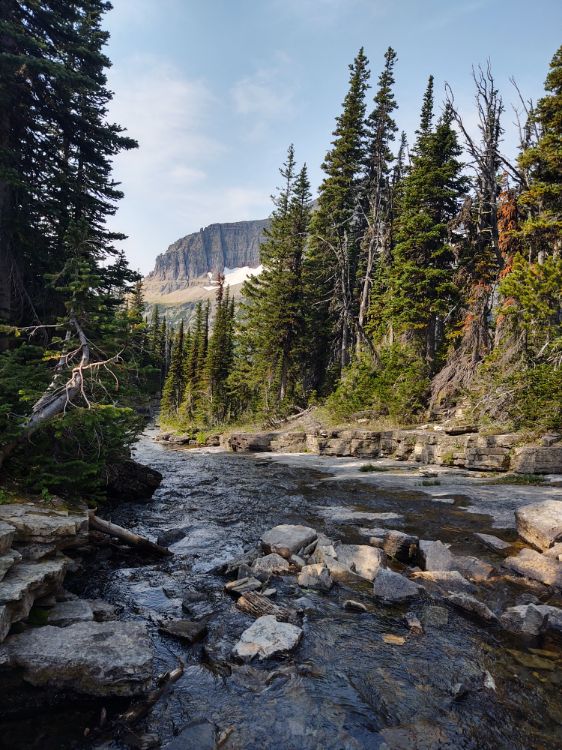
From the Siyeh Bend Trailhead, the path initially meanders alongside the tranquil Siyeh Creek for about two hundred yards before veering sharply right into the dense, refreshing spruce-fir forest. The early miles offer a shaded, peaceful introduction, providing a gentle warm-up before the more significant climbs.
Roughly 1.1 miles into your hike, you'll encounter a crucial trail junction. A turn to the right leads down towards the Jackson Glacier Overlook, an option for those seeking a longer loop (though not recommended for the direct Piegan Pass ascent from Siyeh Bend). To continue your primary objective of reaching Piegan Pass, you'll make a decisive left turn here.
As you proceed, the forest begins to gradually thin, signaling your ascent towards higher elevations. At approximately 2.7 miles from the trailhead, you'll arrive at another important junction: the Siyeh Pass Trail. To continue towards Piegan Pass, bear left. Taking the right path would lead you to Preston Park and eventually up to Siyeh Pass, a different, albeit equally beautiful, destination.
Around the 3-mile mark, the trees finally give way, and the trail emerges above the treeline. You'll find yourself on the exposed talus-scree slopes of the majestic 10,014-foot Mount Siyeh. This is where the landscape truly transforms, opening up to expansive views. Looking southward across the valley, you'll be treated to absolutely grand vistas of Jackson Glacier, and the immense Blackfoot Glacier, currently the largest glacier remaining within the park. Almost directly to your west, tucked just below the summit of 9220-foot Piegan Mountain, lies the eponymous Piegan Glacier. Your destination, Piegan Pass, will also come into view, a visible saddle between the towering peaks. Simply follow the well-defined trail as it makes its steady, gradual ascent all the way to the pass.
Upon reaching the top of Piegan Pass at roughly 4.5 miles, you'll be standing at the saddle between Piegan Mountain and Cataract Mountain. While the views here are already breathtaking, for arguably the finest panoramas along the entire route, we highly recommend extending your hike for another tenth of a mile or so. By walking just a short distance further from the pass, hikers are rewarded with truly outstanding views of Angel Wing, Bishops Cap, and Mount Gould, all dramatic features of the iconic Garden Wall. This extended vantage point also offers spectacular views deep into the Many Glacier Valley, a truly awe-inspiring sight that makes the entire
Piegan Pass Hike: Best Panoramic Views in Glacier National Park one of the park's most memorable experiences.
A Symphony of Glaciers and Peaks: The Views from Piegan Pass
The views from Piegan Pass are nothing short of spectacular, embodying the raw, untamed beauty of Glacier National Park. This high-altitude vantage point places you amidst a sprawling canvas of geological wonders, making it a highlight for any nature enthusiast.
From the pass, the landscape unfurls with a stunning array of peaks that define the Continental Divide. To the south, the monumental presence of Mount Jackson (10,052-ft), Blackfoot Mountain (9,574-ft), and Matahpi Peak (9,365-ft) dominate the horizon, creating a formidable backdrop for the receding glaciers. You'll have uninterrupted views of both the Jackson Glacier and the Blackfoot Glacier, vast ice masses that serve as stark reminders of the park's namesake.
Looking northward and westward, the serrated profiles of Piegan Mountain (9,220-ft) and Cataract Mountain (8,180-ft) flank the pass itself. Further along the Continental Divide to the west, Pollock Mountain (9,190-ft) and the distinctive, jagged outline of the Bishop’s Cap (9,127-ft) rise dramatically. Each peak tells a story of millennia of geological forces, carved and shaped by ice and wind.
Beyond the immediate vicinity of the pass, the extended walk provides an even grander perspective, revealing the majestic Garden Wall with Angel Wing, Bishops Cap, and Mount Gould standing sentinel. The views stretching deep into the renowned Many Glacier Valley are particularly captivating, offering a glimpse into another iconic region of the park. The sheer scale and diversity of the landscape visible from Piegan Pass truly underscore why it is considered one of Glacier National Park’s premier hiking destinations.
Essential Tips for Your Piegan Pass Adventure
Embarking on the Piegan Pass Trail requires preparation and respect for the mountain environment. To make your strenuous journey safe and enjoyable, consider these crucial tips:
- Embrace the Strenuous Rating: As a 12.90-rated hike, Piegan Pass is not for the faint of heart or unprepared. Expect consistent climbing and plan for a full day on the trail. Proper physical conditioning beforehand will significantly enhance your experience. For more on preparing for such challenges, check out Conquer Piegan Pass: Strenuous Glacier NP Hike with Epic Rewards.
- Best Time to Hike: The optimal window for hiking Piegan Pass typically spans from mid-July (once the Going-to-the-Sun Road is fully open and snow has melted from the pass) through early October, before significant snowfall closes higher elevations. Always check current trail conditions and weather forecasts.
- Pack Smart:
- Water: Carry ample water, at least 2-3 liters per person, as there are limited reliable water sources on the upper sections of the trail.
- Layers: Mountain weather can change rapidly. Bring rain gear and warm layers, even on a sunny day.
- Footwear: Sturdy, broken-in hiking boots with good ankle support are essential for the uneven terrain.
- Sun Protection: Sunscreen, sunglasses, and a wide-brimmed hat are critical, especially above the treeline.
- Bear Spray: This is bear country. Carry bear spray and know how to use it. Make noise while hiking, especially through dense forest, to avoid surprise encounters.
- Snacks: High-energy snacks are a must for sustained effort.
- Navigation: A map and compass or GPS device can be helpful, though the trail is generally well-marked.
- Wildlife Encounters: The area around Piegan Pass is known for frequent sightings of ptarmigan and mountain goats, often unfazed by hikers. Keep a respectful distance and never feed wildlife. While rarer, be aware of the potential for larger animals like grizzly bears and black bears; make noise and carry bear spray.
- Parking at Siyeh Bend: The Siyeh Bend Trailhead parking lot is relatively small and fills up very early, especially during peak season (July-August). Arrive before 7 AM or utilize the Glacier National Park shuttle system to avoid frustration.
- Leave No Trace Principles: Help preserve the pristine beauty of Piegan Pass in Glacier National Park by practicing Leave No Trace. Stay on marked trails, pack out everything you pack in, and minimize your impact on the environment.
In summary, the Piegan Pass Trail offers an unparalleled opportunity to immerse yourself in the awe-inspiring grandeur of Glacier National Park. From its challenging ascents to its rewarding panoramic views of ancient glaciers, majestic peaks, and diverse wildlife, this hike truly embodies the wild spirit of the park. While demanding, the experience of standing at 7600 feet, gazing upon a landscape sculpted by ice and time, is a memory that will undoubtedly last a lifetime. Prepare well, respect the wilderness, and embark on this incredible journey to one of Glacier's most iconic destinations.